


AUGUST 2025 NEWSLETTER
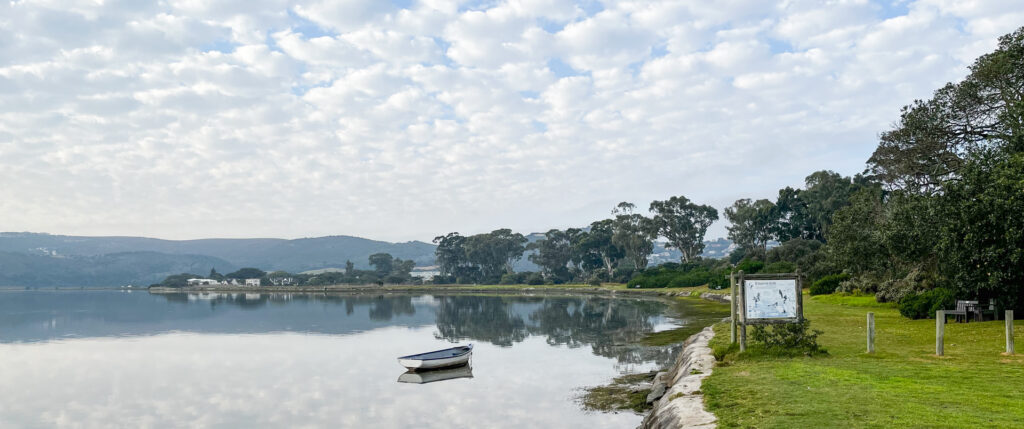
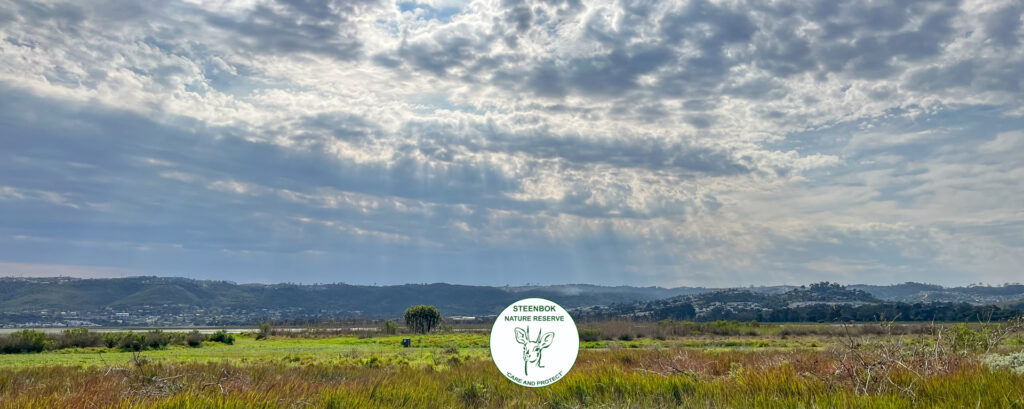
Anyone venturing out and exploring Steenbok Nature Reserve during the cloudy winter months will be treated to vistas of the calm waters of the Knysna Lagoon, a selection of wading birds feeding at low tide, and interesting chats with people from all walks of life who are enjoying this safe, natural environment.
WINTERS IN STEENBOK NATURE RESERVE
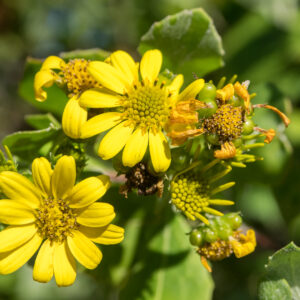
One of the most noticeable changes in the Reserve during the winter months is the brightness of the landscapes. The winter light makes the colours of the lagoon, flowers and trees stand out spectacularly. Visitors can enjoy the warm sunny days and appreciate the wintery rains.
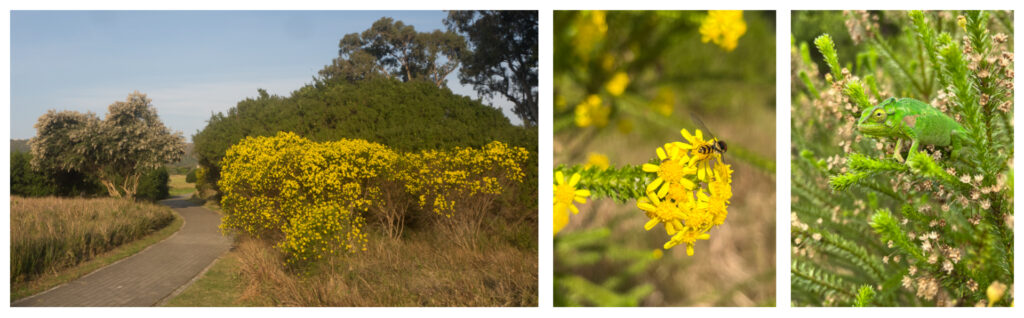
A particularly good example of a display of colour is the bright yellow flowers of the Bietou bush, now in full bloom. This shrub belongs to the asteraceae (daisy) family. The fruit is highly sought-after by birds and is also enjoyed by humans – it is similar in flavor to mulberries. This plant hosts the larvae of a number of butterflies, and bees, ants and beetles are attracted to the flowers.
DONATIONS FROM THE FRIENDS OF STEENBOK
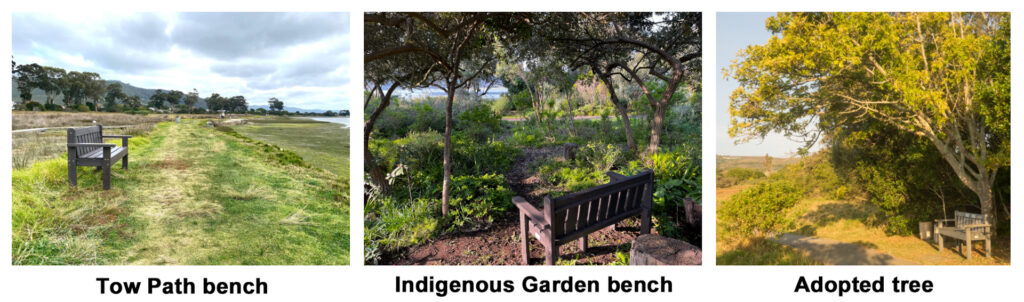
Our quota of benches for the year has been filled, thanks to the kind contributions from our donors. A new bench has been placed in the very popular Indigenous Gardens, and it is a wonderfully relaxing addition to the area where one can peacefully enjoy views of the lagoon as well as the flora growing in this area. The last of the damaged concrete-and-wooden benches has finally been replaced! The new bench is situated near the Boardwalk, set back from the seawall edge. This is an ideal spot for visitors to be entertained by the fisherfolk and passing dog walkers.
Another initiative has been started with the adoption of existing trees in the Reserve. A new memorial plaque with tree identification has been placed on the mature Cape Ash growing in the second tree copse, adjacent to the paved pathway.
A FASCINATING STUDY FROM PROFESSOR BARNES
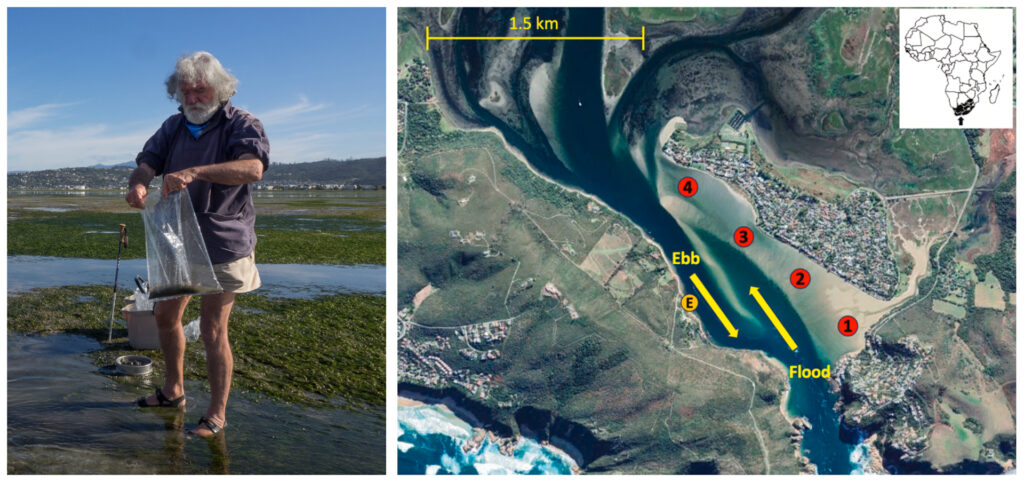
The Friends of Steenbok are always eager to learn more about the Knysna estuary, and with the help of our good friend Professor Richard Barnes, this is possible. Estuarine, Coastal and Shelf Science is the link to his research paper on ‘The constancy and change in microbenthic abundance, biodiversity and assemblage structure along the axis of a flood-tidal sand delta’.
*R.S.K. Barnes
a) Coastal Research Group, Department of Zoology and Entomology, Rhodes University, Eastern Cape, Makhanda, 6140, Republic of South Africa
b) Department of Zoology & Conservation Research Institute, University of Cambridge, Cambridge, UK
WINTER HIGHLIGHTS OF RESERVE MAINTENANCE IN STEENBOK
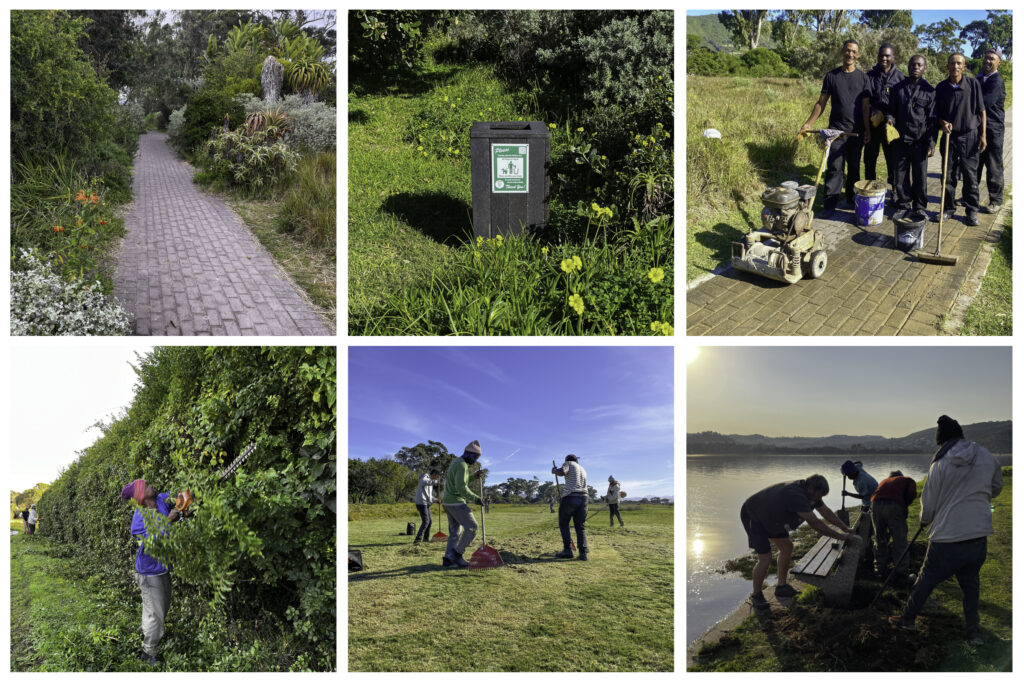
All the unsightly irrigation pipes have been moved away from the edge of the paved pathway. Walkers now have uninterrupted views of the Indigenous Gardens. New signs on the dog poop bins have replaced the old temporary signs throughout the Reserve. Repairs have been made to the uneven paved pathway, and the yearly trimming of Roger’s Way has been completed. A team of thirteen mowers from Ivy Garden Services replaced the ‘out of action’ KM tractor, and mowed a portion of the playing field on the Common. The last concrete and wooden bench has been replaced with a new plastic bench.
INVASIVE CLEARING FROM LAND’S END AND KINGFISHER CREEK
The Reserve is a fascinating example of how to maintain a balance between a protected natural environment and a built-up suburb.
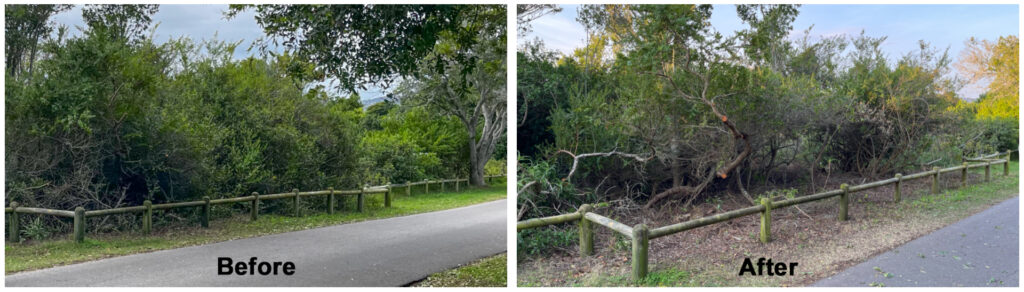
The clearing of the invasives in the dune forest at King Fisher Creek and Land’s End occurs every two years, and has now been completed. This biennial project focuses on the removal of aggressive invasives that prevent the growth of indigenous trees and shrubs. The work done in this area has significantly encouraged indigenous growth, as well as improved visibility for the safety of anyone choosing to explore these natural pathways. The Steenbok team is pleased to report that young milkwoods, candlewoods, real yellowwoods, wild pear, crossberries, Cape-ash and white stinkwoods are now growing in this area.
CELEBRATING WOMEN IN STEENBOK
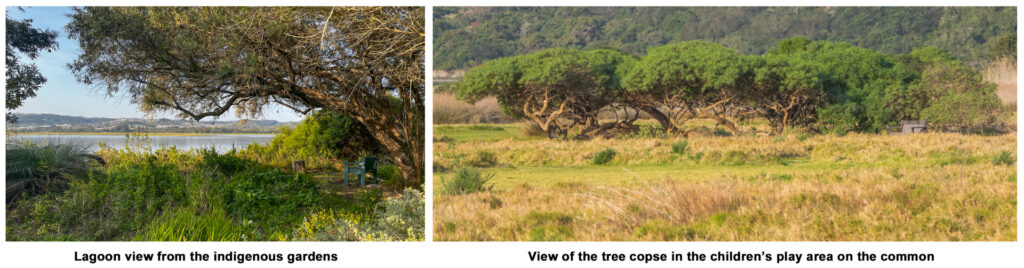
A heartfelt shout-out to all women, acknowledging their strength, resilience, and contributions to society. 9 August is National Woman’s Day in South Africa, and what better way to celebrate than to thank the volunteers (fondly known as the Steenbok Hack Group) who continue to improve the aesthetics of the Reserve. Armed with garden tools and endless enthusiasm, this small group of women are creating scenic natural spaces for all Steenbok’s visitors to enjoy. Pathways in these areas have been improved so that visitors can stroll peacefully while observing the abundant flora and fauna. Delightful views of the Knysna Lagoon have been opened up.
CWAC’S WINTER WATER BIRD COUNT
Every year the Coordinated Waterbird Count (CWAC) program of midsummer and midwinter censuses is conducted at a large number of South African wetlands. These yearly counts are focused on wading birds that use the lagoon as a food source and for breeding. The counts are conducted by volunteers – people and organisations with a passion for waterbird conservation. This is one of the largest and most successful citizen science programmes in Africa, providing much-needed data for waterbird conservation around the world.
Currently the project monitors over 400 wetlands around the country, and compiles waterbird data for over 600 sites.

Steenbok Nature Reserve is privileged to be part of the ‘Mud Plodders’ team whose three hour early morning hike starts at Land’s End and finishes at the water’s edge near the old airport site. As well as recording the waterbirds, Di Stromberg and Tim Gaskell were enthralled by Robert Smith’s interesting stories about the different species of birds spotted along the way. The highlight of this year’s count was the recording of an African Darter.
The July water bird count can be found on the Steenbok website.
THE AFRICAN DARTER by Robert Smith
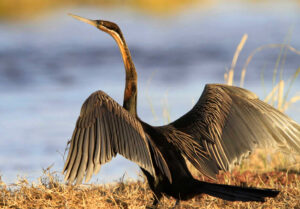
A fairly rare visitor to our lagoon is the African Darter. To our surprise, one was spotted on a Coordinated Water-bird Count (CWAC) in a relatively saline area on the shores of the Knysna Lagoon on 22 July, 2025.
This species is a specialized stealth hunter and occurs mainly in fresh waters – hence their comparative absence in saltwater lagoons and estuaries such as that in Knysna. They are almost totally absent on the ocean shore-line.
The Darter owes its specialized hunting techniques to a number of factors:
As opposed to Cormorants, a Darter’s wettable body plumage allows the body feathers
to become inundated, giving the bird the ability to remain either motionless or to move very silently in the water column while searching for and ambushing prey. Coupled with the above, is a higher bone density and wide wings and a long stiff tail, making buoyancy optimal – usually at about 2 m depth. The wings and tail-structure are also an adaptation for good long-distance flight on journeys that the birds invariably need to undertake in search of new habitats and food sources when conditions change.
After diving, the birds need to dry out and warm up in the sun and take on the “spread-winged” appearance often seen in the field. This is the price they pay for their ability to become wet and swim for long periods under water.
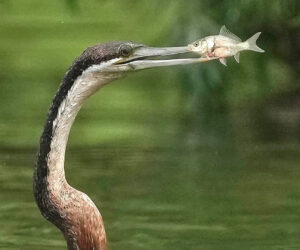
As opposed to Cormorants, a Darter’s wettable body plumage allows the body feathers to become inundated, giving the bird the ability to remain either motionless or to move very silently in the water column while searching for and ambushing prey. Coupled with the above, is a higher bone density and wide wings and a long stiff tail, making buoyancy optimal – usually at about 2 m depth.
The wings and tail-structure are also an adaptation for good long-distance flight on journeys that the
birds invariably need to undertake in search of new habitats and food sources when conditions change.
After diving, the birds need to dry out and warm up in the sun and take on the “spread-winged” appearance often seen in the field. This is the price they pay for their ability to become wet and swim for long periods under water.
Darters have a long sinuous neck as well as a special adaptation between the 8th and 9th vertebrae, allowing for a sudden “spring action” to take place when ambushing and seizing prey. This is the reason for their common English name of “Darter”.
The birds have a sharp pointed bill which acts as a spear when seizing prey (mainly fish but sometimes frogs). (Cormorants, on the other hand, have a hooked bill for grasping their prey). The prey item is usually speared with the bill slightly open, most often on the upper mandible for smaller prey items, but with both mandibles when larger prey items are taken.
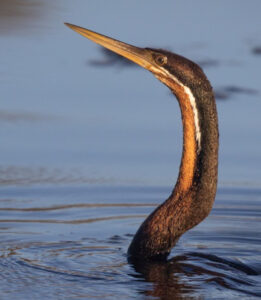
While swimming, only the head, bill and a very short part of the neck is visible – giving the bird the descriptive common Afrikaans name of “Slanghalsvoel” – or “Snake Bird”.
The bird is adapted to stay underwater for long periods, sometimes for as long as two minutes, for optimal foraging.
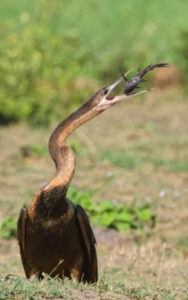
Smaller prey is swallowed under water, but the sometimes-comical problem arises when the bird emerges with the prey item partially or fully jammed on the bill. The bird then has somehow to force the prey item lower down and off the bill (usually on the branch it is perched on), detach the prey and then toss it into the air to catch it again and ensure that the prey takes on a “heads-first” position for swallowing – swallowing a fish “tail-first” with all the fins, scales etc. pointing in the wrong direction, would be a ghastly experience, too awful to contemplate!
During this process of disentangling the prey, massaging it into the correct heads-first position, the prey can be pirated by other birds such as gulls, terns and kingfishers, in a process known as “kleptoparasitism”.
So, this shows that competition for scarce resources is evident right along the food-chain!
QR CODES ARE NOW IN STEENBOK!
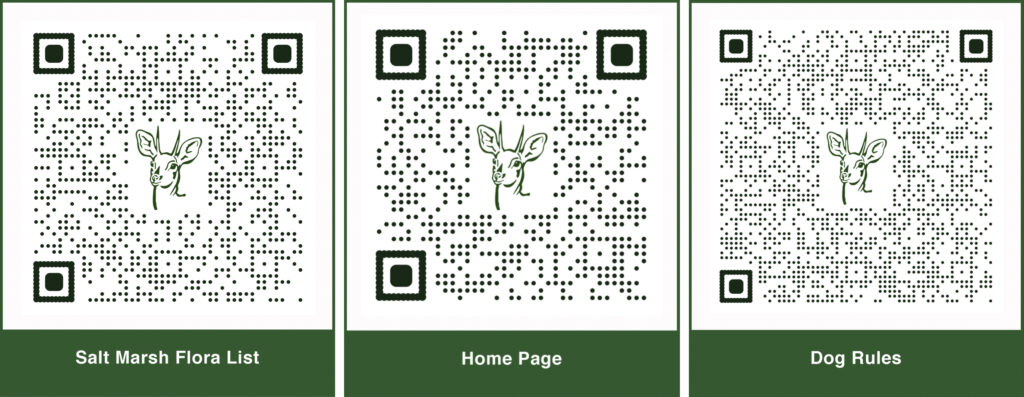
Visitors can now look up interesting information about a number of different subjects by accessing the QR codes throughout the Reserve. The Boardwalk has a direct link to the Salt Marsh page on the Steenbok website. The main entrance notice board and most of the dog bins have important information about the municipal by-laws concerning dogs in open public spaces.
There is also a link to an exciting children’s activity attached to the tree sign at the Boma. For those wanting to explore more of the Reserve’s 17 hectares of natural land, a link to the website’s home page and a map of Steenbok can be found on all the entrance signs in the Reserve.
GET YOUR HEAD IN THE CLOUDS
Suzi Thomopolus, the creator of Steenbok’s Kids Corner, challenges you to look up!!!
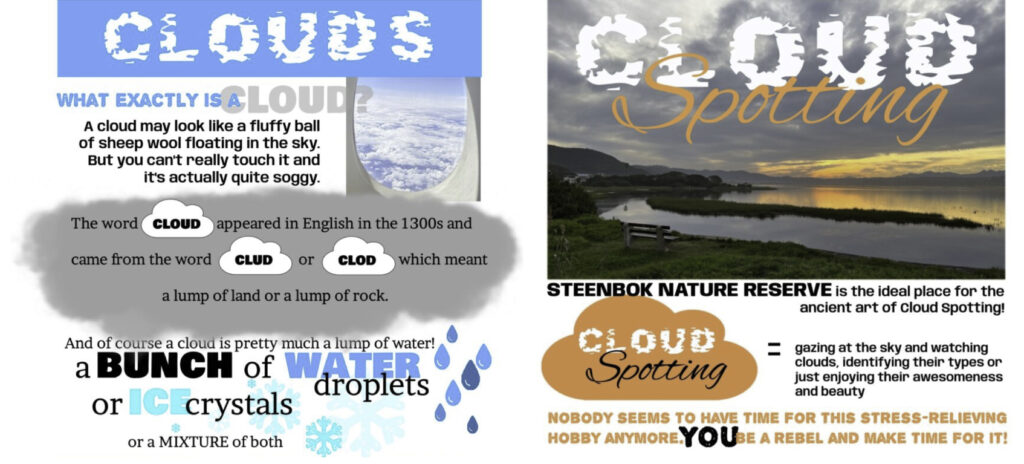
Her latest edition gives activities and information, and invites you to explore the clouds that are seen in the Reserve.
Learn about the different types of clouds and how to make an impressive cloud spotter with easy step-by-step instructions.
WINTER FLORALS
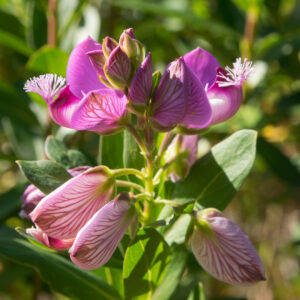
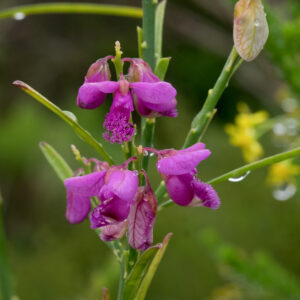
Look out for the magnificent display of the bright yellow Euryops virgineus (river resin bush) flowers. To complement the yellow display visitors to Steenbok can also glimpse the occasional pinks and purples of shrubs belonging to the Polygalaceae family.
THE FRIENDS OF STEENBOK MEMBERSHIP APPEAL
You can be a Friend of Steenbok Nature Reserve by donating R600 per year – the equivalent of only R1,64 per day!
Steenbok Nature Reserve is a Public Benefit Organization in terms of Section 18A of the Income Tax Act 1962. This means that your donation will not dent your bank balance and will provide the Reserve with much-needed funds to manage and maintain our high standards, and to be a welcoming destination for all visitors.
The donations received in 2024 / 2025 were used to:
- Cover the cost of supplying and collecting 60 000 dog poop and 2500 refuse bags
- Maintain our irrigation system
- Maintain all the established gardens and natural pathways
- Provide educational signage, brochures and Newsletters
- Repair the seawall
- Repair the paved pathway
Apply online to become a Friend of Steenbok Nature Reserve, or make a direct payment of R50 p/m or R600 p/a to:
The Friends of Steenbok Nature Reserve Trust
Standard Bank – Knysna Branch 050-314
Account No 082579342
Quote your name and surname as your reference.
VOLUNTEER TO MAKE A DIFFERENCE IN STEENBOK NATURE RESERVE
Volunteering is one of the most fulfilling activities on offer in Steenbok. Join our dynamic team, and work alongside the Steenbok committee, who are responsible for a variety of portfolios: garden and infrastructure maintenance, projects and planning, liaison with Knysna Municipality and SANParks, communication, special events, and fund raisers.
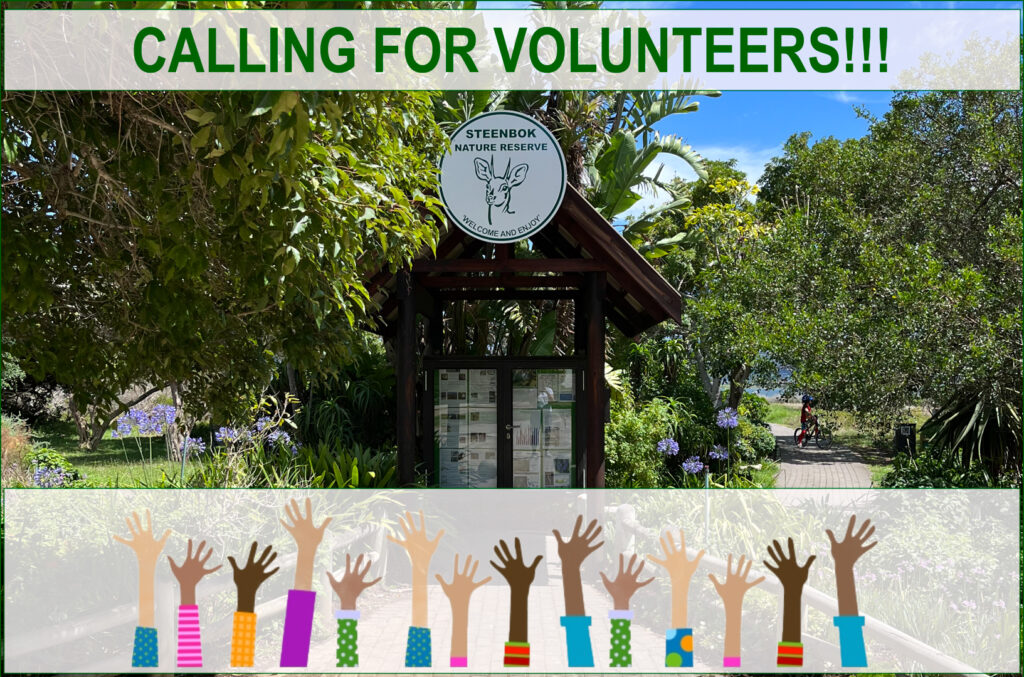 Another way to volunteer is to join the Steenbok ‘Hack Group’, who meet once a month to help with the natural enhancement of the Reserve.
If any of these tasks spark an interest, please email us.